
Inside Google: How Two Guys Changed the Internet Forever
Short Story of Google

In 1998, two Stanford PhD students had a simple idea: build a better way to search the internet.
Today, that idea became Google — part of Alphabet Inc. — a company worth nearly five trillion dollars and shaping how billions of people access information every day.
Garage, Idea and PageRank
Larry Page and Sergey Brin met at Stanford University in 1995. They didn’t instantly get along — in fact, they often disagreed. But that tension turned into one of the most powerful partnerships in tech history.
Their core question was simple:
What makes a webpage important?
Larry Page’s answer was revolutionary: treat links like academic citations.
If many pages link to one page, it must be valuable.
That idea became the PageRank algorithm — the foundation of Google Search.

BackRub and the Birth of “Google”
The first version of the search engine was called BackRub, because it analyzed backlinks.
But they wanted something bigger.
The name “Google” comes from “googol” — the number 1 followed by 100 zeros, symbolizing the vast amount of information on the web. A spelling mistake during domain registration turned it into google.com.
And it stuck.

From Garage to Global Giant
Google officially started in 1998 in a garage owned by Susan Wojcicki (who later became CEO of YouTube).
Today, the scale is completely different:
Annual revenue (2025): ~$400B
Net income (2025): ~$132B
Employees: ~190 000 people worldwide
Market Cap: ~$4,5T
For comparison, Google started as a team of just two founders.
How Google Beat Yahoo and became so successful
At the time, the internet was dominated by portals like Yahoo.
Everything was packed into one page: news, weather, sports, ads, and links everywhere.
Google did the opposite:
a clean white page + one search box
That simplicity changed everything.
Results were faster, more relevant, and less overwhelming. Users stayed — and never really left.
Legend says Yahoo had two chances to buy Google:
$1 million in 1998
$3 billion in 2002
They said no both times.
Next Steps
In 2000, it launched AdWords, a system that changed online advertising by showing ads based on what users were actually searching for. This became the core of Google’s business model and still generates most of its revenue today.
In 2004, the company went public (IPO) and also introduced Gmail, which revolutionized email with massive storage and fast search.
Over the next years, Google made two of its most important acquisitions:
Android in 2005, which later became the world’s dominant mobile operating system
YouTube in 2006, which turned into the largest video platform on the internet and one of the most powerful media companies globally
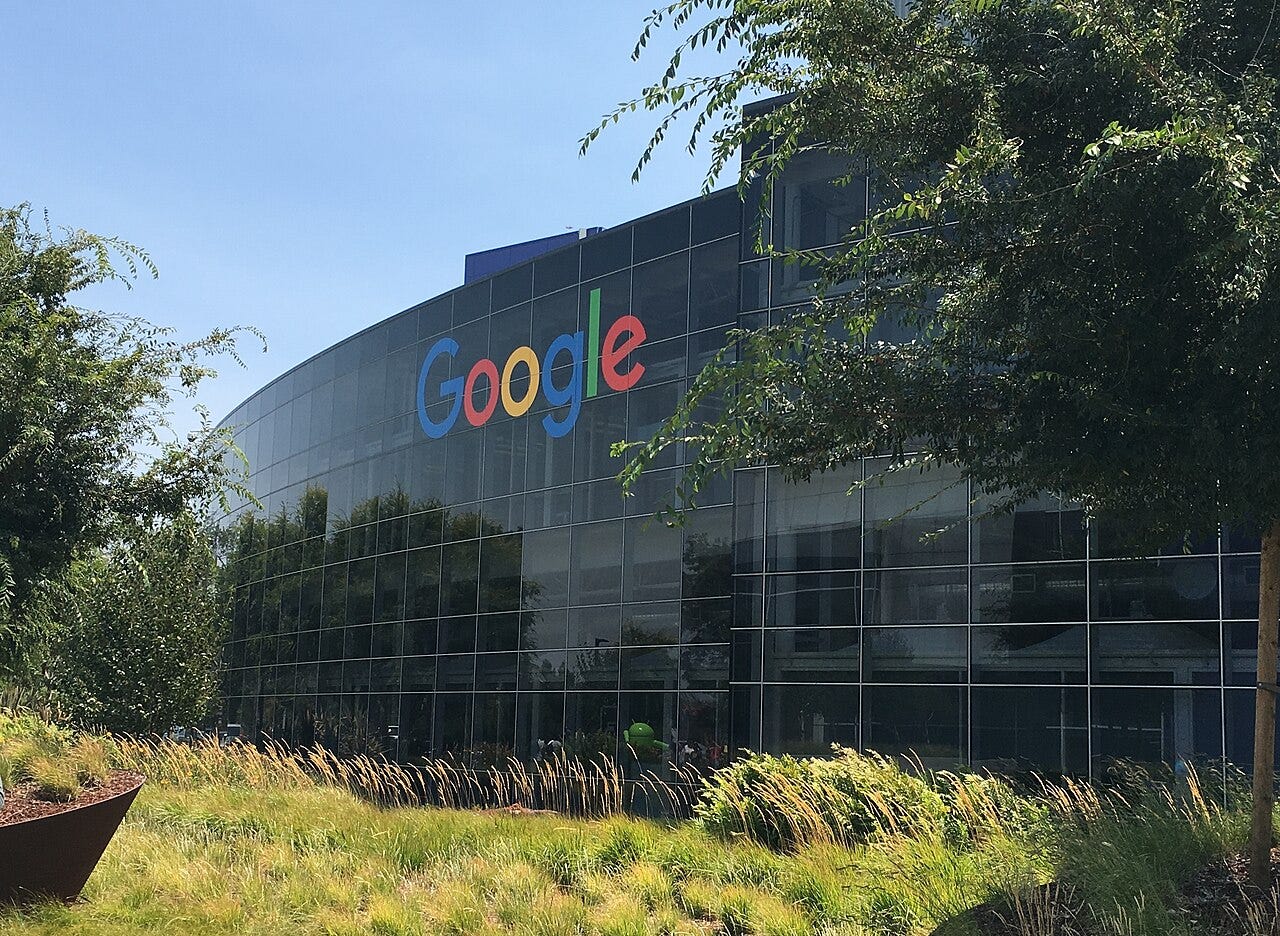
Transformation
In 2015, Google was restructured into a holding company called Alphabet Inc. This move separated the core internet business from experimental and long-term projects.
Today, Alphabet includes:
Google Search (core business and advertising engine)
YouTube (video platform and media ecosystem)
Android (mobile operating system)
Google Cloud (enterprise cloud computing competitor to AWS and Azure)
Google Ads ecosystem (AdWords + AdSense)
DeepMind (advanced AI research lab)
Shaping the Future: Google’s AI and Cloud Revolution
Google is no longer just a search engine company. Today, it is investing billions of dollars in artificial intelligence, cloud computing, and the infrastructure that powers modern technology.
A key step was the acquisition of DeepMind in 2014, which helped Google become one of the leaders in AI research. The company later developed Gemini, its flagship family of AI models.
Google is also rapidly expanding Google Cloud, competing with Amazon AWS and Microsoft Azure. To support its AI ambitions, the company is building massive data centers and developing its own AI chips called TPUs.

From a garage startup to one of the most valuable companies in history, Google’s journey shows how a single idea can transform entire industries.
The next chapter is being written right now—in AI, cloud computing, and technologies that may redefine how we interact with information.
Can Google remain the dominant force in the age of AI, or will a new generation of companies challenge its position?
What do you think? Share your thoughts in the comments.
Sources
This article was prepared based on publicly available and verified information, including:
Google — https://about.google/
Wikipedia — https://en.wikipedia.org/wiki/Google
Britannica — https://www.britannica.com/money/Google-Inc
Business of Apps — https://www.businessofapps.com/data/google-statistics/
Companies by Market Cap — https://companiesmarketcap.com/
Alphabet Investor Relations — https://abc.xyz/investor/
What is Alphabet Inc — https://www.techtarget.com/whatis/definition/Alphabet-Inc
NBC — https://www.nbcnews.com/id/wbna15196982
CNET — https://www.cnet.com/culture/google-buys-android/
The Guardian — https://www.theguardian.com/technology/2014/jan/27/google-acquires-uk-artificial-intelligence-startup-deepmind
larp larp larp sahur